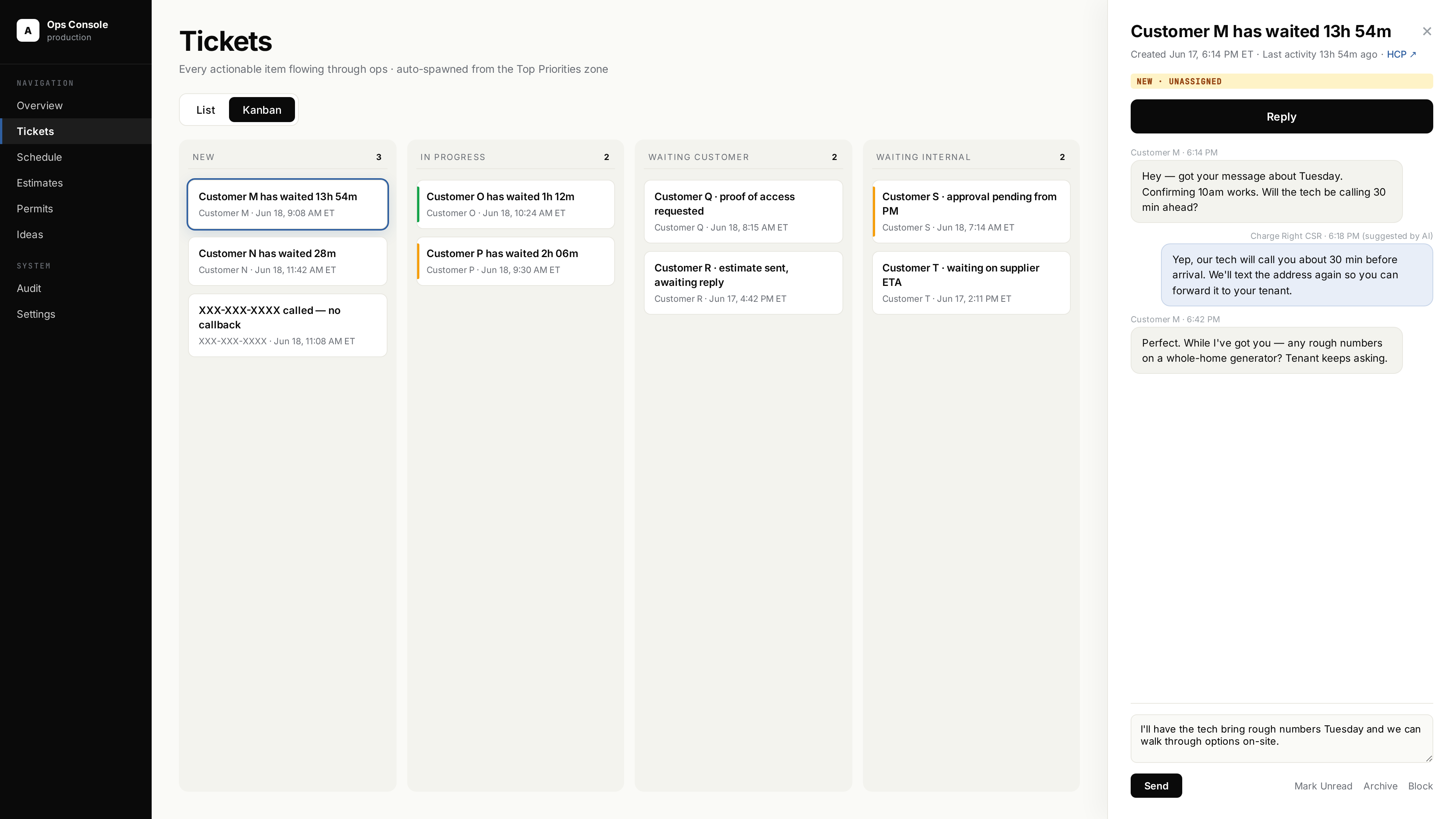
What it does
- Captures inbound signals from voice (Twilio, RingCentral, etc.), email (Gmail), CRM (HCP), web forms, and chat.
- Auto-generates a ticket with the original transcript, sender details, and AI-suggested next step.
- Routes to the right human based on rules you set (or AI inference).
- Tracks SLA and elapsed wait time on every open item.
- Two views built in: priority list for triage, Kanban for workflow.
What automatically becomes a ticket
How it works
Each input channel has its own ingest adapter. Twilio webhooks for missed calls, Gmail push for new emails, HCP webhook for new jobs and invoices, and a generic form endpoint for the rest.
Every ingest creates a ticket with normalised fields (source, sender, body, ts, customer-link) plus an AI-generated summary line that makes the queue scannable at a glance.
Tickets carry through their lifecycle: new → in-progress → resolved. Reopen with one click. Filter by source, owner, age. Search across everything.
The stack
Claude (Anthropic) or GPT-4 (OpenAI) for summarisation and routing. Twilio for voice, Gmail API for email, HousecallPro webhook for jobs/invoices. Python ingest workers, Flask UI, SQLite for ticket state.
Who it's for
Any team that's losing leads because the front desk drowns under five inboxes. If you've ever asked 'who replied to that call?' more than twice in a week, this is for you.