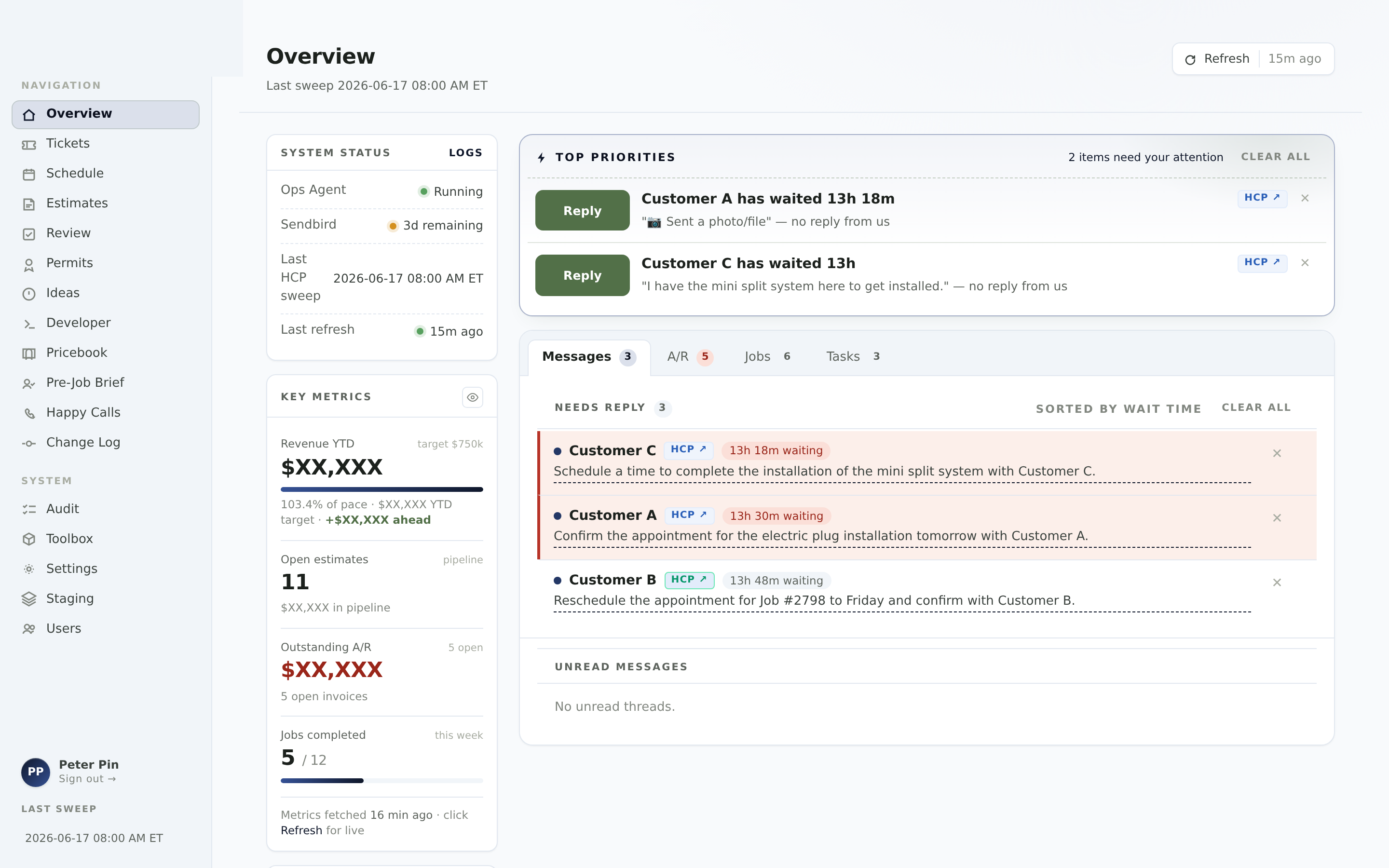
What it does
- Watches every inbound signal (calls, missed calls, emails, web forms, CRM events).
- Ranks each one by urgency, age, and customer value.
- Drafts the response your team would have sent anyway.
- Auto-clears items once they're handled, archives the rest.
- Sends a daily and as-needed Telegram brief so nothing waits unseen.
Things the queue surfaces every day
How it works
Every inbound signal flows through an AI triage layer (Claude, GPT-4, or whichever model fits the workload best). The model reads the full context, customer history, and job status, then assigns a tier: act now, act today, act this week, or FYI.
The top tier becomes the day's action queue. Each item carries the headline, the suggested reply, a one-click button to send it, and the link back into the source system, whether that's your CRM, Gmail, or anywhere else.
When someone on the team handles an item, the queue updates in real time. When a customer waits longer than the threshold, the item escalates automatically.
The stack
Claude (Anthropic) and GPT-class models (OpenAI) for triage and drafting. Python for the pipeline. HousecallPro, Gmail, and Twilio for the signal sources. Flask + SQLite for the operator dashboard. Telegram for human-in-the-loop alerts.
Who it's for
Service businesses with 5+ inbound channels and at least one human whose day is split across them. Electricians, HVAC, plumbing, landscaping, MSPs, dental, vet, anything appointment-driven.